
A Systemic Approach for the Treatment and Control of Dandruff
Dandruff is a very common condition from which as many as 50 out of 100 people suffer. Recent research shows there is no single cause, and results from treatments likewise vary from person to person. An overall systemic approach which relies on good hygiene, topical applications, and a healthy, deliberate diet is our recommendation for the treatment and control of dandruff.
Flaky skin can be caused by a number of factors, some related to environment, others to common substances or disease. For some, the dry cold of winter may produce an itchy, flaky scalp. Lotions containing alcohol that desiccate the skin may also bring on symptoms of dry, scaly skin. Dandruff produced by predisposing conditions such as scalp psoriasis or seborrheic dermatitis can vary in severity, from mild itching and light flaking to severe inflammation of the skin, reddened lesions, a profusion of oily or dry flakes, and infection in extreme cases. Cradle cap in babies is a mild form of seborrheic dermatitis, and is characterized by patches of itchy, dry skin on the infant's scalp, head or face. As there is no one cause of flaky skin or scalp, an individual has to consider what potential substances or conditions they might be exposed to. Once these potential causes have been eliminated, approaching the problem of dandruff holistically attempts to promote better systemic health—that is from within or throughout the body—while tackling the specific problem in particular.
Psoriasis is a dermatological condition not well understood, although research suggests an immune system malfunction is to blame. Stress, exposure to cold temperatures, family history, as well as injury or illness are all described as factors increasing the risk of developing psoriasis. Because the disease manifests itself in different areas of the body, dermatologists describe psoriasis according to which part of the body is affected. If a person shows symptoms of one form of psoriasis, there is a one in two chance they will also suffer from scalp psoriasis, and the dandruff associated with it. Psoriasis is difficult to diagnose, so ask a dermatologist for an opinion if you think you suffer from this.
Seborrheic dermatitis is also not well understood, however recent research on lipophilic (literally, "fat-loving") yeasts of the Malassezia genus are strongly implicated as a cause for seborrheic dermatitis and dandruff.
Fat-loving, Dandruff-causing Fungi
A curiously unpleasant, yet necessary consideration for sufferers of dandruff are the Malassezia fungi, which were first identified in association with dandruff in the late 19th century by French researcher Louis–Charles Malassez. In the intervening years the generic name for this group has been changed from Malassezia to Pityrosporum and back again, as taxonomists compete to split the finest of hairs (no pun intended) in distinguishing each species from all the others. The nomenclature of this group has been complicated in part by its complex life cycle, where it alternates between its fungal structure and an alternate, yeast-like form that show up in a variety of shapes and sizes! As more became known about the group in the 1950's, two main species were classified: Pityrosporum ovale, a lipid-dependent variety on humans; and Pityrosporum pachydermatis, a non-lipid-dependent species found primarily on animals. Further research in the 1990's divvied up the genus Malassezia—the generic name on which mycologists ultimately settled—into at least ten lipid-loving forms: M. globosa, M. restricta, M. furfur, M. slooffiae, M. sympodialis, M. japonica, N. nana, M. dermatis, and M. yamatoensis. Malassezia globosa and M. restricta have been shown to correlate with seborrheic dermatitis and dandruff.
Malassezia likewise presents a complicated picture as to how it contributes to dandruff. For instance, it has not been understood until recently why there is no clear correlation between the actual number of Malassezia cells found colonizing the scalp and the severity or even the presence of dandruff. A person may harbor a good deal of Malassezia on their scalp, but suffer from no dandruff at all, or only a moderate case. Then again, someone else may harbor a smaller number of cells but suffer more flaking and itching than their neighbor. This picture has been confusing. The causal relationship was established by findings that show when the antifungal activities of zinc and selenium salts, glycols or highly specific azoles reduce the levels of Malassezia cells, there is also a definitive reduction in the severity of dandruff. Yet while the lack of correlation between the quantity of Malassezia cells to severity of dandruff for a long while perplexed researchers, when effective anti-fungal treatments were used, they noted in all cases that reducing Malassezia on the scalp also reduced dandruff.
What also became clearer with this research was that individual sensitivity is a key factor in whether a person suffers from dandruff or not. A person's predisposition to dandruff relates to how their underlying permeability barrier, the stratum corneum, or corneal layer of the scalp, responds to irritating free fatty acids metabolized by Malassezia. Lipophilic Malassezia metabolizes sebaceous secretions from hair follicles, producing free fatty acids from sebum triglycerides. The corneal layer of people predisposed to dandruff reacts to these metabolites by sloughing off flakes of dry skin. The degree of dandruff a person sheds has to do with the sensitivity of their corneal layer to these fatty acids. The corneal layer of those without a predisposition to dandruff appears to be unaffected by the free fatty acid byproducts of Malassezia metabolism.
A Systemic Approach to Dandruff
Topical dandruff solutions—immediate treatment from the outside in.
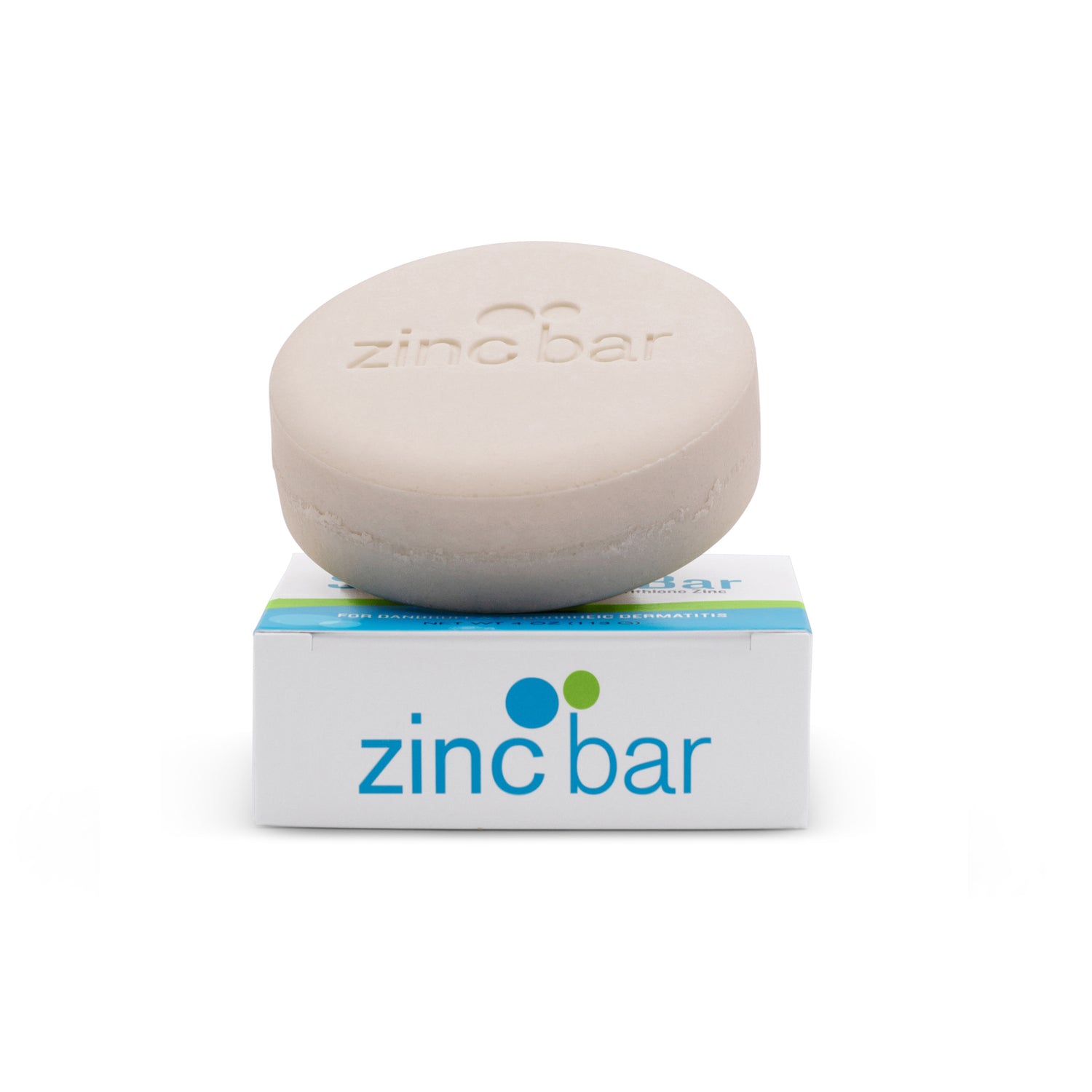
DermaHarmony offers several products for the topical treatment of dandruff and seborrheic dermatitis. If seborrhea is located on the scalp alone, of dandruff castile liquid soap containing zinc or our zinc shampoo bars are a great option. Products will selenium or salicylic acid will do the trick as well. Super strong shampoos and conditioners are not usually found in retail stores. Other coal tar or tree oil shampoos can also be used, but these can be quite harsh on the hair. Our Pyrithione Zinc Shampoo Bars are an aggressive and effective treatment for severe dandruff, as well as the itching and flaking associated with scalp psoriasis and seborrheic dermatitis, yet it is gentle enough for daily use!
A thoughtful diet—dandruff support from the inside out.
With a holistic treatment approach, one always considers the nutritional aspects of healing. To start, foods rich in anti-dandruff nutrients (see box at right) are thought to provide good systemic support for the underlying causes of dandruff. Biotin, a member of the vitamin B-complex, is an especially interesting dietary supplement. An essential nutrient, biotin is necessary for cell growth and the metabolism of fats and amino acids. In fact, it is required by all organisms for proper metabolism, playing a role in the citric acid cycle, regulating mitochondrial fatty acid oxidation, and recent research suggests biotin aids in such basic functions as the regulation and transcription of DNA through the biotinylation of histones.
Nutrients for a Healthy Scalp:
- biotin
- other B vitamins
- lecithin
- selenium
- sulfur
- zinc
More research is needed to elucidate the direct nutritional effects of biotin with regard to dandruff or seborrheic dermatitis, but it is well established that B vitamins bring health benefits by supporting cell growth, cell division and a healthy metabolism, as well as enhancing immune system response and nervous system function.
The American botanist, Dr. James A. Duke, whose most recent book is an update of his definitive work on medicinal herbs, Handbook of Medicinal Herbs, praises the health benefits of biotin in his acclaimed work, The Green Pharmacy. Dr. Duke writes:
Biotin, an important vitamin-like nutrient that the body uses in many ways, shows up in my database as a major anti-dandruff compound. Naturopaths recommend getting six milligrams a day for prevention and treatment of both dandruff and the related condition seborrhea... My database tells me that soybeans are very high in biotin (750 parts per million). That means I'd need only a handful to provide the six milligrams I'd need to save my scalp from dandruff and seborrhea. I have often eaten that many soybeans as I wandered through the soybean fields at the US Department of Agricultural Research Station in Beltsville, Maryland, where I've spent the last 30 years trying to spread the word about the healing power of plants.
As with biotin, more research is needed to establish direct benefits with any of these nutrients in the control and treatment of dandruff, but barring individual sensitivities to these foods, the nutrients they provide are all acknowledged components of a healthy diet.
Foods to Support a Healthy Scalp:
- Along with soy, other foods rich in biotin are garlic, peas, barley, avocado, and lentils, just to name a few.
- Foods containing selenium, zinc, sulfur, lecithin not only support good nutrition but possess anti-dandruff ingredients.
- Brazil nuts are rich in selenium, while zinc is found in lettuce, spinach, kale and cucumber.
- Parsnip, radish, and cabbage contain thousands of parts per million of sulfur, while Brazil nuts, soybeans, flax, peanuts, pumpkins and plums all supply hefty doses of lecithin.
Nutritional supplements.
For people suffering from dandruff, adding a pharmaceutical-grade multivitamin/multimineral supplement to your daily routine can help ensure that you are getting all the vitamins and micronutrients listed above. Another dietary nutrient worth consideration is purified fish oil, which contains omega-3 fatty acids. Including an essential fatty acid supplement will help balance out the pro-inflammatory effects in the body of an atopic response often seen in dandruff; omega-3's will also help support the integrity of the scalp's dermal layers.
Along with inflammation, weak digestion is also often seen in association with skin problems. Taking a digestive enzyme supplement and a good probiotic a few minutes before meals will enhance your ability to digest and absorb nutrients and help ward off unfriendly organisms that attempt to colonize in your body. Try as we may, no one of us eats a perfect diet every single day, and fortifying your stores of nutrients with high-quality supplements is a simple, commonsense way to care for your body's needs.
Putting it All Together
To recap, the itchy, flaky scalp of dandruff or seborrheic dermatitis is caused by three main factors, after environmental factors have been eliminated: Malassezia fungi, sebaceous secretions, and individual sensitivity. Malassezia globosa and M. restricta are the two lipophilic species that have been found to metabolize sebaceous triglycerides, releasing irritating (to some) free fatty acids that act on the permeability barrier of the scalp, the corneal layer. In people susceptible to dandruff, free fatty acids disrupt the corneal layer, resulting in the itching and flaking of dandruff. Control of Malassezia in clinical research has shown that decreasing levels of Malassezia cells results in a lessening of the severity of dandruff.
Topical shampoos that utilize the anti-fungal properties of zinc, selenium, and salicylic acid are a primary way of keeping Malassezia in check. Shampoos also help remove sebaceous oils, leaving lipophilic fungi less able to metabolize and release free fatty acids onto the scalp. Just as importantly, a deliberate diet designed to aid in good general health, having the nutrients needed for optimal cell metabolism and cell growth, and protecting the health of your digestion promotes healthy skin. A healthy corneal layer may resist the effects of free fatty acids produced by Malassezia and help reduce the severity and annoyance of dandruff.
When you put these simple external and internal measures together, you have a systemic approach to healing the discomfort and unpleasant appearance of a dandruff problem. Give it a try, and let us know how you do—we're here to listen and help.
Finding Your Severe Dandruff Solution
No matter how mild or severe your dandruff, there are steps you can take to optimize the health of your scalp and skin and to minimize your symptoms. These suggestions can all be used in conjunction with other topical treatments, soaps, nutritional supplements including probiotics, and dietary guidance to gain relief from dandruff symptoms.